


ESG in Europe on hold despite transatlantic divide
A slew of high‑profile mandate withdrawals from US asset managers points to a growing rift with European investors over ESG. Yet this has done little to revive ESG momentum in Europe, where policy initiatives remain largely on hold.
Sustainable investing has become something of a political and market “hot potato” across much of the US investment community, amid sustained pressure on ESG. By contrast, attitudes in Europe remain more supportive. This divergence has led to US asset managers – notably BlackRock, the world’s largest – losing mandates from European institutions increasingly concerned about a perceived weakening of ESG commitments.
This article is also available in podcast/video form. Watch the video below from our YouTube channel, or follow The Intuition Finance Digest on Spotify, Apple Podcasts, or Amazon Music.
ESG still in rollback mode
Despite relatively stronger support for ESG among European investors, there is little evidence of renewed momentum at the policy level. ESG remains on the back foot in Europe, with regulatory ambition increasingly tempered by economic and political realities.
A key milestone in this shift was the European Commission’s Omnibus “simplification” package in February 2025 – a broad set of measures designed to ease sustainable finance regulation, including aspects of the carbon border adjustment mechanism and the EU’s wider investment framework. The package marked a clear step back from the original ambitions of the EU’s Green Deal, the bloc’s overarching framework for climate and sustainability policy.
While not amounting to outright deregulation, the package reflects a decisive shift in direction: reducing compliance burdens, narrowing the scope of requirements, and delaying implementation, while concentrating obligations more heavily on larger companies with the greatest environmental impact.

Europe’s ESG agenda is not disappearing, but its pace is being reset around practicality, competitiveness, and implementation capacity.
Factors behind the roll back
There are several drivers behind the shift in Europe:
- The compliance burden became politically contentious, as rapidly introduced and overlapping rules created a heavy reporting and governance load.
- Competitiveness rose to the top of the EU agenda, with policymakers increasingly focused on the US, China, energy costs, industrial weakness, and slow growth.
- SMEs and mid-sized firms highlighted significant “trickle-down” effects, as larger companies and financial institutions continued to demand extensive ESG data from them.
- The political environment shifted, with the regulatory mood since 2024 becoming less Green Deal–maximalist and more attuned to business concerns.
- Practical implementation challenges became clearer, as issues around data quality, systems, assurance, supplier information, and legal liability proved more complex than anticipated.
This implementation burden mirrors a broader compliance trend in financial services, where regulators increasingly expect firms to prove that controls work in practice, not simply maintain policies on paper. Read more: Bank compliance: Rising regulatory expectations.
EU Taxonomy proves burdensome
The EU Taxonomy was designed as a common classification system for environmentally sustainable economic activities. It remains a core anti‑greenwashing and capital allocation tool, but it has also been criticized for its technical complexity and reporting burden.
In particular, companies have struggled with requirements to assess immaterial activities and gather granular data that may not be central to investment decisions.
As a result, the Commission has moved to simplify Taxonomy reporting, with changes applying from 1 January 2026, covering the 2025 financial year.

The EU Taxonomy remains central to sustainable finance, but its technical complexity has made simplification a policy priority.
SFDR revision seeks clearer product categories
The Sustainable Finance Disclosure Regulation (SFDR) was introduced to standardize disclosures across sustainable investment products. It groups funds into three categories:
- Article 6: no explicit sustainability objective
- Article 8: promotes environmental or social characteristics
- Article 9: explicit sustainable investment objective
In practice, these categories became de facto labels rather than pure disclosure classifications. Article 8 in particular was seen as overly broad, making comparisons difficult for investors.
Asset managers also pointed to extensive templates and legal uncertainty. The result was a regime that generated significant data but often limited clarity, while raising concerns about greenwashing.
In November 2025, the Commission proposed a major revision, aimed at replacing the current framework with clearer product categories and reducing the overall disclosure burden.
Omnibus measures narrow CSRD scope
The Corporate Sustainability Reporting Directive (CSRD) significantly expanded ESG reporting requirements, applying to large EU companies, listed SMEs, and many non‑EU firms with substantial EU operations.
However, companies – particularly mid-sized firms – argued that implementation had become too costly and complex.
The Omnibus reforms have narrowed the scope considerably. The revised framework now applies primarily to companies with more than 1,000 employees and over €450 million in annual turnover, while third-country thresholds have also been raised.
As a result, many firms previously expected to report will either fall out of scope or see deadlines deferred, with the European Sustainability Reporting Standards (ESRS) also being simplified.
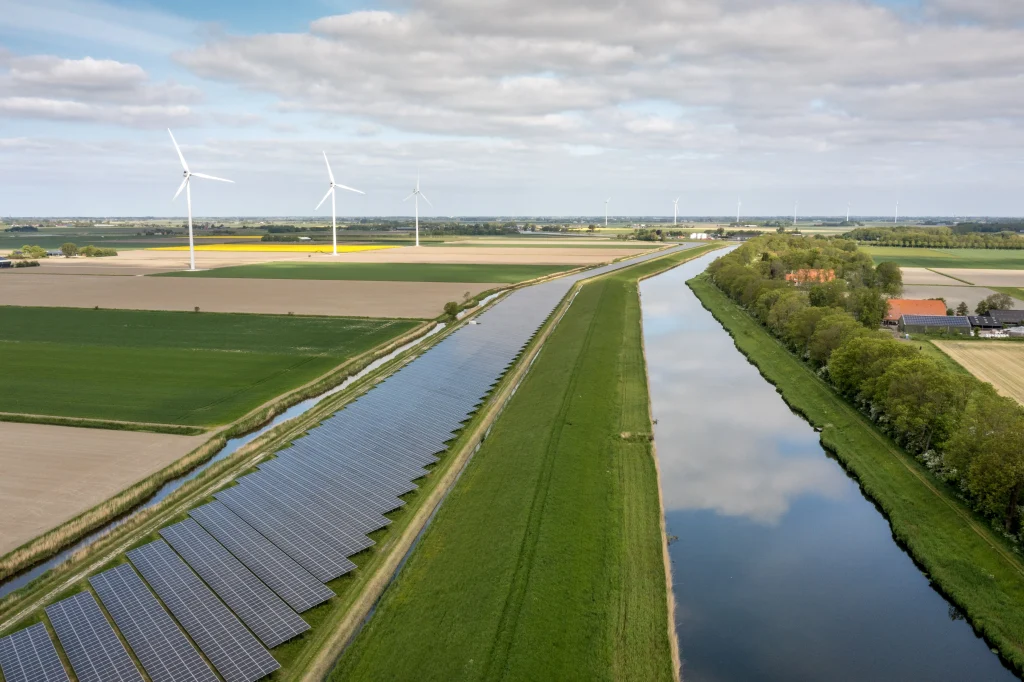
CSRD reporting is moving from broad coverage toward a more targeted regime focused on the largest companies.
CSDDD considered a competitive disadvantage
The Corporate Sustainability Due Diligence Directive (CSDDD) was intended to require large companies to address human rights and environmental risks across their value chains.
Business groups raised concerns about liability exposure, supply-chain complexity, and the risk that EU companies could be disadvantaged relative to global competitors.
The Omnibus process has delayed and narrowed the regime, with obligations now pushed back to 2029 and the transposition deadline extended to July 2028.
CBAM, deforestation, and broader ESG reforms
The carbon border adjustment mechanism (CBAM) was designed to prevent carbon leakage, but has also been criticized for its administrative complexity and potential trade frictions. Its implementation timetable has been adjusted, with certificate sales now postponed to February 2027.
Other measures have similarly been delayed or simplified. The EU Deforestation Regulation has been pushed back to end‑2026, reflecting concerns about traceability requirements, supply-chain readiness, and pressure from trading partners.
Rules on green claims have also faced resistance, with businesses arguing that verification requirements could prove costly and slow.
One area where the EU remains committed is the regulation of ESG ratings providers, targeting opacity and inconsistency in a segment seen as central to market functioning.
CBAM also shows how climate policy, energy costs, and trade exposure are becoming more interconnected. For a market-focused view of that pressure, see our analysis of how the Iran war upends commodities markets. Read more: Iran war upends commodities markets
Conclusion
Overall, while Europe remains more supportive of ESG than other regions, the direction of travel is clear: ambition has given way to pragmatism. ESG policy is not being reversed outright, but it is increasingly in a holding pattern, shaped by competitiveness concerns, political change, and the realities of implementation.
Intuition Know-How has a number of tutorials relevant to the content of this article:
- ESG – An Introduction
- ESG – Primer
- Sustainability & Sustainable Development
- Sustainable Finance – An Introduction
- Sustainable & Responsible Investing– An Introduction
- Sustainable Development Goals (SDGs) – An Introduction
- Sustainability Reporting
- Taxonomy Regulation (Europe)
- Greenwashing
- Sustainable Finance Disclosure Regulation (SFDR)
- Corporate Sustainability Reporting Directive (CSRD)
- Decarbonization
- Deforestation
- ESG – Data & Ratings
Frequently asked questions
Why is ESG momentum in Europe still on hold?
ESG momentum in Europe is still on hold because regulatory ambition is being tempered by economic, political, and implementation pressures. While European investors remain more supportive of ESG than many US market participants, policymakers are now placing greater emphasis on competitiveness, compliance costs, business concerns, and the practical difficulty of implementing broad sustainability rules.
How did the Omnibus package change the direction of EU sustainable finance regulation?
The European Commission’s Omnibus simplification package marked a shift from broad ESG ambition toward a more pragmatic regulatory approach. It did not amount to outright deregulation, but it aimed to reduce compliance burdens, narrow the scope of requirements, delay implementation, and focus obligations more heavily on larger companies with the greatest environmental impact.
Why has the EU Taxonomy been criticized by companies?
The EU Taxonomy remains an important tool for reducing greenwashing and guiding capital toward sustainable activities, but companies have criticized it for technical complexity and heavy reporting demands. In particular, businesses have struggled with assessing immaterial activities and collecting highly detailed data that may not always be central to investor decision-making.
What problem is the SFDR revision trying to solve?
The SFDR revision is intended to address confusion around sustainable investment product categories and reduce the disclosure burden on asset managers. The original Article 6, Article 8, and Article 9 categories became de facto labels, with Article 8 seen as especially broad. This created comparison challenges for investors and raised concerns about greenwashing.
How have the CSRD and CSDDD been affected by the Omnibus reforms?
The Omnibus reforms have narrowed and delayed parts of both the CSRD and CSDDD. The revised CSRD framework now applies mainly to companies with more than 1,000 employees and over €450 million in annual turnover. The CSDDD has also been delayed and narrowed, with obligations pushed back to 2029 and transposition extended to July 2028.
What is happening to CBAM, deforestation rules, and ESG ratings regulation?
CBAM, deforestation rules, and green claims requirements have all faced delays or simplification due to concerns about administrative complexity, trade friction, traceability, and verification costs. However, the EU remains committed to regulating ESG ratings providers, as ratings are seen as important to market functioning but affected by opacity and inconsistency.
Learn more about financial regulation, and build your expertise across modern financial markets with our Know-How financial learning platform.
Click here to learn more, or fill out the form below.
Browse full tutorial offering